


CRAC/CRAH Units
A comprehensive range of Computer Room Air Conditioning Units (CRAC units) or Computer Room Air Handling Units (CRAH units) that provides precision cooling to data centre environments.
About CRAC/CRAH Units
Both CRAC and CRAH units keep the temperature, humidity, and air distribution to precise set points to optimise the performance of critical data centre hardware.
Different configurations are available depending on the application and can be combined with our award-winning Leak Prevention System, to create a secure data centre environment.


Why choose CRAC and CRAH units from Aqua?
With decades of process industry experience behind us, we understand the challenges and key issues faced daily within businesses running critical process applications, such as data centres, laboratories, and research & design facilities. We take a holistic, consultative approach to every project and appreciate the importance of integrating technologies and the impact downtime can have on a 24/7 operation. Regardless of whether your system includes CRACs, CRAHs, rear doors, in-rows, HPC or hot spots, we’ll ensure it comes together seamlessly, giving you the very best, most energy-efficient solutions for your specific needs. We can even design a system using natural coolant sources.
As well as our Sales & Projects team, our directly employed Service Engineers are on hand to support you 24/7 and we offer fully bespoke, priority response Preventative Maintenance Plans so that we’re on hand when you need us most. Our Hire division also offers full contingency planning, ideal for critical sectors such as data centres and telecoms.
- Small footprint vs kW cooling capacity
- Cooling, dehumidification & humidification
- Dual power supply
- Thyristor controlled heating
- Inverter Driven Scroll Compressors


Our CRAC and CRAH Range
Our range of highly efficient CRAC units includes direct expansion (DX) air-cooled, (DX) water-cooled and chilled water models. Units can be supplied with external remote condensers and free cooling coils.
CRAH units incorporate a highly efficient chilled water coil, designed to operate at high water temperatures. This allows approach temperatures, between the air off temperature and water on temperature, as low as 3˚C.
Design & Installation
A Complete 360 Service including:
Design Consultancy
Free design consultancy including AutoCAD drawings, 3D modelling and energy calculations.
Project Management
Encompassing civil works, offloading & positioning, pipework installation, mains power & cabling, commissioning and CDM compliance. All our Engineers are F-Gas accredited specialists and manage work according to agreed RAMS and site-specific H&S conditions.
Aftersales Support
Including preventative maintenance service plans to maximise efficiency and extend product lifespan. We can also help with spare parts, glycol, and water treatment.
 Posted on Google
 Tomos Owens-Jones
Trustindex verifies that the original source of the review is Google.
Great customer support!Posted on Google Robert BrownCalled Aqua cooling out @ 4 pm Engineer Alan arrived at 7pm repaired the fault that was preventing the fridge units running on our 1000 tonne onion store. Really appreciated the excellent service. thankyou from E C Brown & SonsPosted on Google
 Mark CooperAfter working with Aqua Cooling over the past couple of weeks, I cannot recommend them enough. Connor has been the reliable engineer on site every day, nothing is too much trouble for him. Simon and Joe spent time with us as well for some of the jobs that required the extra hands. The whole job has gone smoothly with great communication from the engineers and Olivia (an absolute gem) in the office.Posted on Google
 Oliver StarrZeus Hydratech MD, Oliver Starr invited the Aqua Cooling team to collaborate with them to support one of the largest steel processing plants in the UK. The customers’ existing chiller units (fitted to large CNC equipment was old which meant parts and technical support was no longer available) Aqua Cooling were able to support us directly with the specification of suitable chillers from their range. I have been very impressed with their knowledge and service delivering such a large and technical order. Thanks to all at Aqua on behalf of Zeus Hydratech Limited. Oliver Starr | Zeus Hydratech Managing Director.Posted on Google
 Dawn WhiteGreat service with a speedy response. What more can you ask for? Thank you! On behalf of Turbex LtdPosted on Google
 Julie PinhorneVery good service. we are really pleased with the equipment on loan it looks nearly brand new. I had an issue at first with one of the machines not turning on, the customer service member of staff was immediately on the phone talking us through the issue which we resolved over the phone. I am Happy to use this company again. Reliable, friendly helpful staff.Posted on Google
 Robin HewittWe had a short term air-con need and Aqua were great. They responded to my enquiry almost immediately, and the hire was sorted within the hour. Even better, they delivered the units next day (and we're not local!) Aqua also extended my hire period with no dramas at all. Overall, truly excellent service

Frequesntly Asked Questions
What is the difference between a CRAC unit and a CRAH unit?
A CRAC (Computer Room Air Conditioner) unit has its own refrigeration system built in and does not require a separate chilled water supply. A CRAH (Computer Room Air Handler) unit uses chilled water from a central plant to cool the air. CRAHs are generally more energy efficient at scale but require chilled water infrastructure.
How do I decide whether a CRAC or CRAH unit is right for my data centre?
The main considerations are the scale of your data centre, whether you have or plan to have central chilled water plant, and your energy efficiency targets. For smaller or standalone rooms a CRAC is often simpler. For larger facilities with central cooling plant a CRAH is typically more efficient. Aqua can advise based on your specific setup.
Can Aqua supply CRAC/CRAH units alongside a complete data centre cooling design?
Yes. Aqua’s data centre cooling solutions team can supply CRAC or CRAH units as part of a complete system design including the chilled water plant, CDUs, and controls integration. A joined-up approach ensures the whole system performs as intended.
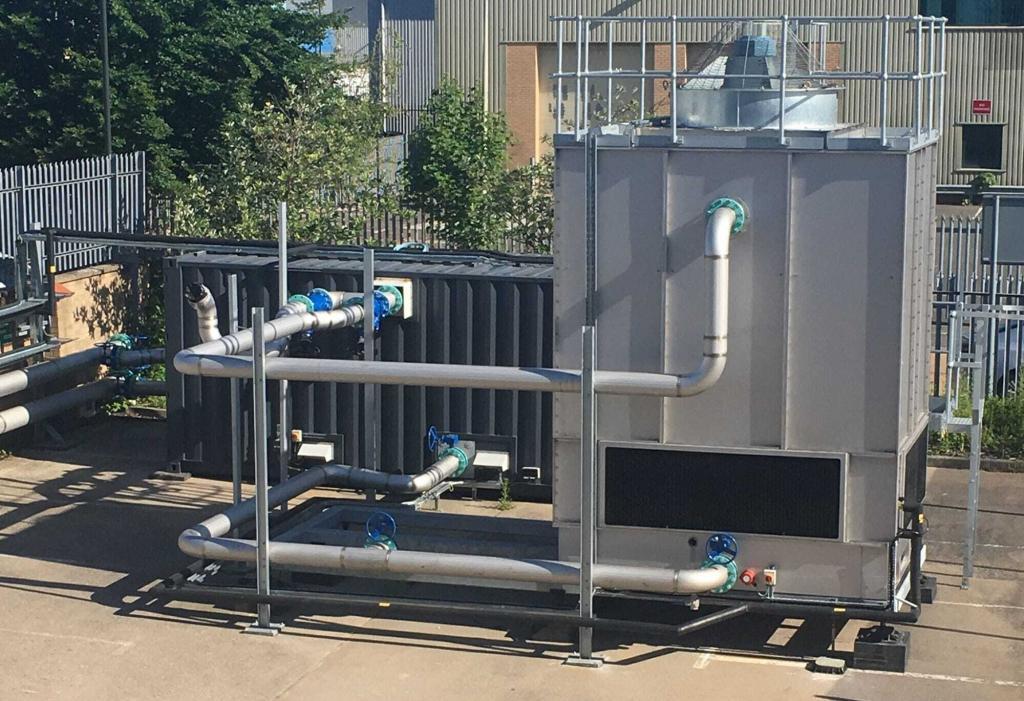
Keeping the World’s Data Cool
4D Data Centres is a UK-based colocation provider offering ultra-fast connectivity, cloud, and cyber solutions worldwide. Data centres power nearly all online technologies but require significant energy for both operation and cooling. When 4D acquired a Gatwick facility, Aqua upgraded its live chiller-based system with an intelligent, energy-efficient cooling solution—significantly reducing mechanical cooling needs and introducing fresh air free cooling.